
Asia Pacific continues to demonstrate a strong and improving fraud profile. This is not driven by any single initiative, but by consistent efforts across our ecosystem partners working together over time. The outcomes we are seeing reflect how the ecosystem has collectively prioritised strengthening payments security, and it is important to recognise the role our clients and partners have played in this.
How is sustained improvement reflected in the data?
- Asia Pacific has maintained the lowest card-present fraud rates globally for the past three years¹ across Visa’s global network
- Card-present fraud remains at 0.8 basis points,² or just 80 fraudulent transactions per 1 million transactions
- Card-not-present (CNP) fraud has declined by 26% between 2021 and 2025, with overall fraud improving by 20%³
Fraud reduction at scale comes from collective efforts working together consistently across the ecosystem.
What are shaping these outcomes?
Two structural shifts have brought about a clear impact.
The first is reduced data exposure through tokenisation.
Tokenisation replaces sensitive card details with non-exploitable credentials, lowering the value of compromised data. In Asia Pacific, token penetration reached 43% in 2025, up five percentage points year-on-year. As more transactions move onto token rails, there is simply less sensitive data available to exploit.
The second is more consistent and robust authentication.
The adoption of 3-D Secure (3DS) is changing how fraud can scale. In Japan, the introduction of a 3DS mandate in 2025 was associated with a 24% reduction in non-tokenised eCommerce fraud. Across the region, increased adoption by large digital merchants contributed to a USD68 million reduction in fraud.⁴
These changes are reinforced by Visa’s AI-driven capabilities.
Visa Provisioning Intelligence has reduced immediate follow-on fraud by more than 30% in Asia Pacific (excluding India), while Visa Advanced Authorization continues to improve real-time decisioning. In Taiwan, increased adoption to 75% was associated with a 45% reduction in fraud.⁵
Overall, the pattern is consistent — fraud is being reduced by intervening earlier in the payment lifecycle, where controls are most effective.
A shifting threat landscape
At the same time, the nature of the threat is evolving.
Fraud is increasingly organised, data-driven, and scalable across markets. Criminal networks are operating with growing sophistication, using automation and AI to continuously adapt.
Alongside this, scams have become more prominent, which makes them harder to address through traditional fraud controls.
This shifts the nature of the problem. It is no longer only about preventing unauthorised transactions, but about addressing how deceptive activity is enabled and scaled across the ecosystem.
Shifting left: Intervening earlier to stay ahead
Visa’s approach has evolved in line with this. We are expanding the surface areas of protection by identifying risk earlier in the lifecycle and enabling more consistent intervention across the system.
In practice, this means:
- Limiting upstream risks by identifying compromised credentials, cyber exposure, and emerging threat infrastructure earlier
- Controlling the middle by identifying higher-risk or deceptive entities earlier in onboarding, improving visibility into abnormal transaction patterns
- Reducing downstream risk by inspecting and protecting uncarded money movement and non-monetary behavioural signals
Together these layers mitigate risk upstreaming harmful activity from scaling instead of addressing it only at the point of transaction.
At a network level, this is reflected through Visa’s Scam Disruption (VSD) team. By combining global intelligence, advanced analytics, and collaboration with clients and law enforcement, Visa works to uncover networks of coordinated scam activity operating across acquirers and jurisdictions and support early disruption.
Since its inception, the team has identified over USD2.6 billion in fraud attempts globally, providing valuable intelligence into how organised criminal enterprises establish, scale, and monetise scam and fraud operations.⁶
Strengthening accountability in merchant risk
Disruption alone is not sufficient. As scams continue to scale, prevention needs to be applied more systematically across the ecosystem.
This is why Visa has strengthened the Visa Integrity Risk Program (VIRP), one of its core ecosystem integrity protection programs. Originally established to help address illegal transactions and higher-risk merchant activity, VIRP has evolved to encompass a broader range of scams and security threats, including scams, transaction laundering, collusion, and other deceptive business practices. This expansion reflects the growing convergence of fraud, scams, and organised criminal activity within the global payments ecosystem.
While VSD focuses on identifying, investigating and disrupting these threats, VIRP provides the program framework through which Visa can share information about merchants associated with illegal activity, security threats, and deceptive practices. Together, they have helped uncover large-scale organised fraud and scam operations, providing greater visibility into how deceptive actors establish, scale, and monetise criminal activity through seemingly unrelated businesses. This allows intervention to occur earlier, limiting the ability of organised crime networks to expand and reducing the downstream harm experienced by consumers, merchants, and financial institutions.
In Asia Pacific, this approach is complemented by the Merchant Elevated Risk Program (MERP), introduced in 2026 following strong and consistent client feedback on the need for more effective controls around deceptive merchant activity.
MERP focuses on identifying merchants that show clear indicators of elevated risk, such as unusual transaction spikes, higher fraud or dispute ratios, or inconsistent activity patterns.
The program also reinforces the role of acquirers in overseeing merchant activity within their portfolios, while providing a more consistent framework for intervention when issues arise.
For the cardholder, MERP introduces an additional layer of protection in confirmed cases of deceptive merchant activity, with clearer pathways for reimbursement where appropriate.
The intent is to ensure that improved visibility leads to clearer accountability and more consistent action across the ecosystem, not just identifying risk, but addressing it effectively.
Building a more resilient ecosystem
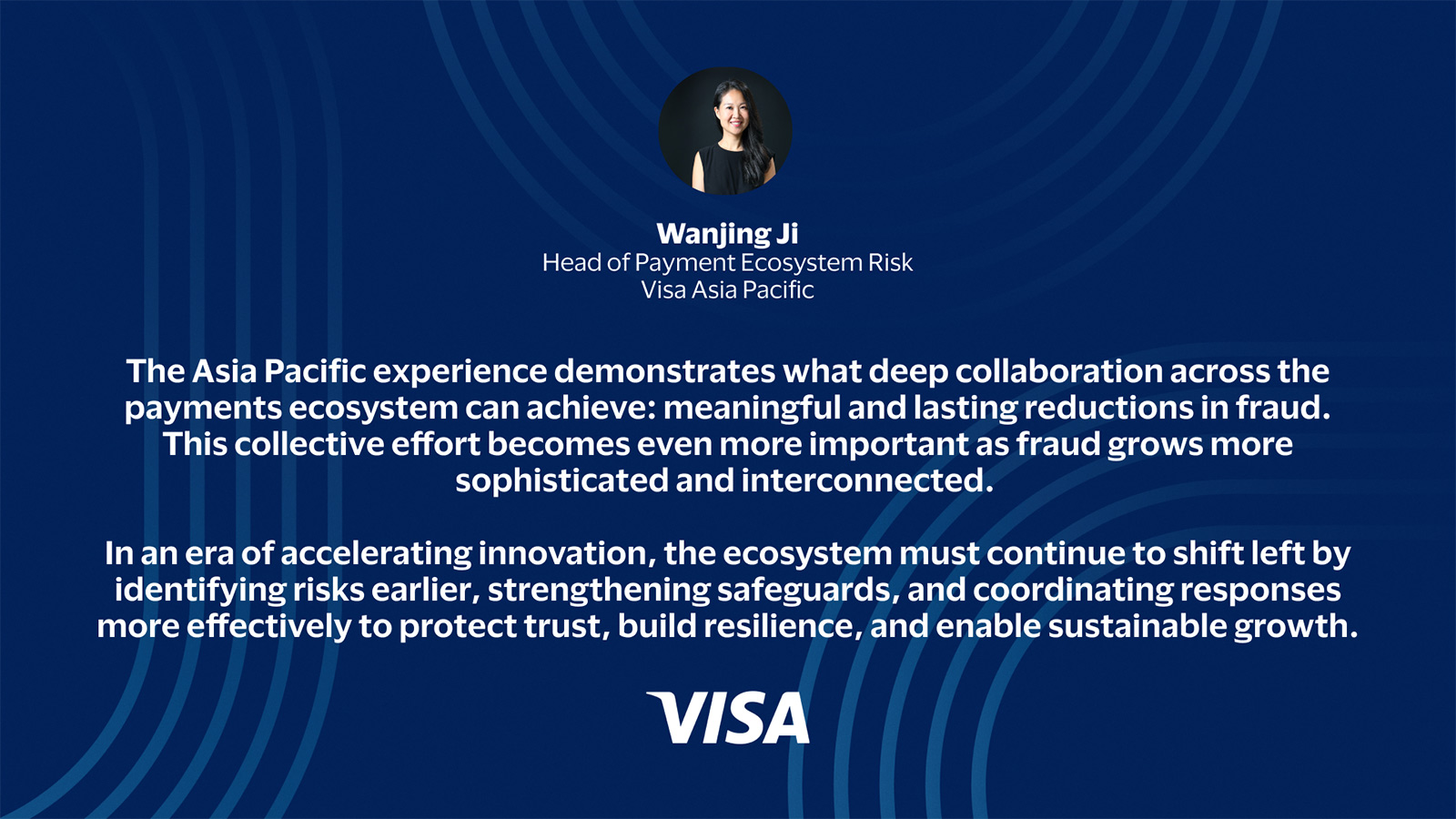
The experience in Asia Pacific shows that sustained fraud reduction is achievable.
It also highlights the importance of continuing to evolve how the ecosystem responds. As threats become more sophisticated and interconnected, responses need to be applied earlier, more consistently, and in a more coordinated way.
Looking ahead, step-change developments in agentic commerce, cybersecurity standards, and digital assets will introduce further complexity. Maintaining trust will depend on how effectively the ecosystem continues to work together.
By combining secure technologies, network-level intelligence, and strong collaboration, the region is not only reducing fraud today, but also building a payments system that is more resilient and better prepared for what comes next.